 Skip to content
MAC Tool: Manual Handling Risk Assessment for Workplace Compliance
SafetyRAC’s free Manual Handling Assessment Tool (MAC) offers businesses and health and safety advisors a method to assess manual handling tasks and identify potential risks. This tool follows HSE guidance INDG383.
Caution: This tool serves as a guide only and does not replace professional advice. If you require further information and support on manual handling, Contact SafetyRAC for more information.
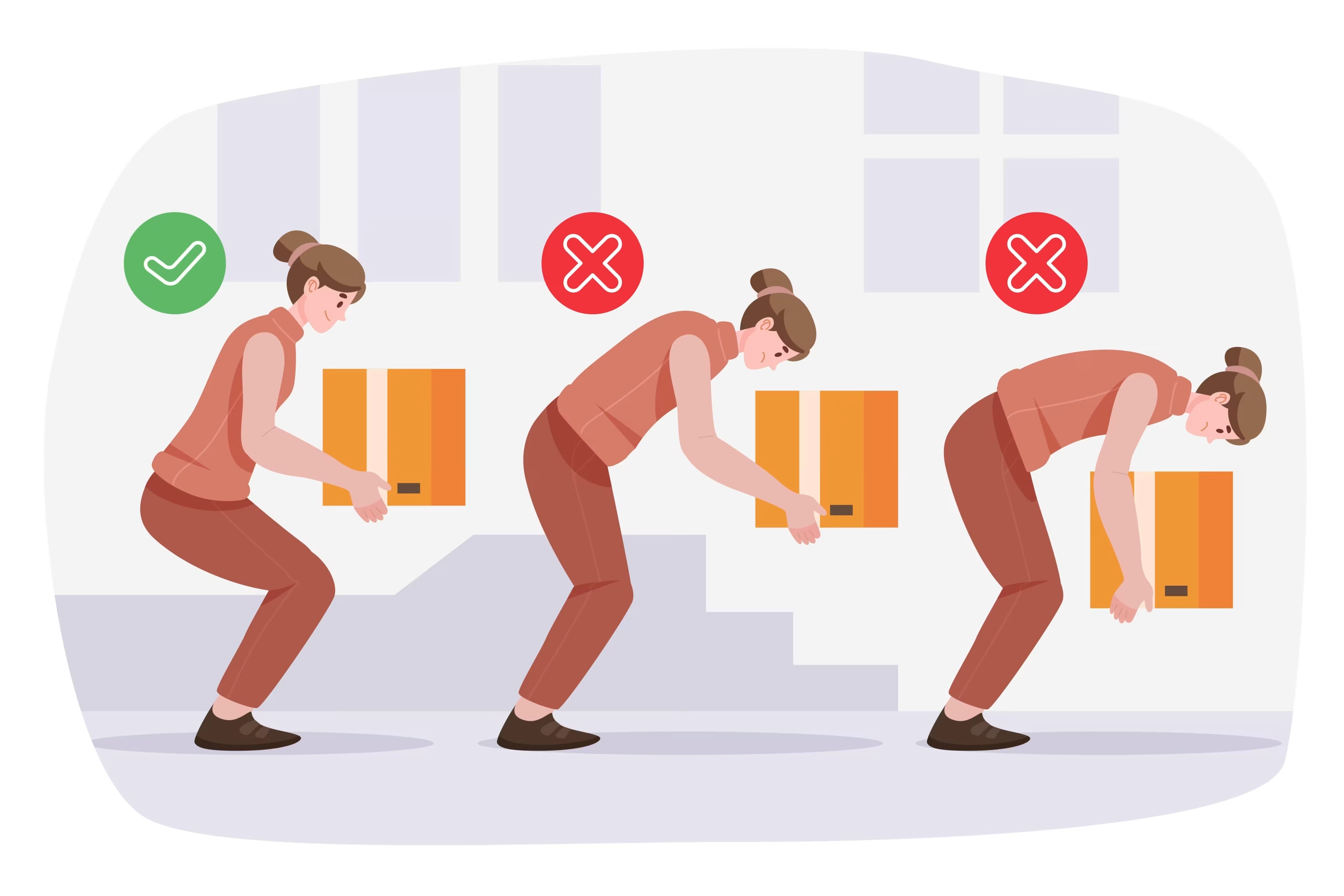
MAC Assessment Tool for Manual Handling
What is the MAC Tool?: INDG383 provides guidance on assessing and managing manual handling risks, specifically targeting tasks that could lead to musculoskeletal injuries. The MAC tool, designed and intended for single person lifts helps identify and control risks by evaluating task factors such as load, posture, and movement frequency.
MAC Tool Assessment Form
Load Weight/Frequency
Hand Distance from Lower Back
Vertical Lift Zones
Torso Twisting and Sideways Bending
Postural Constraints
Grip on the Load
Floor Surface
Environmental Factors
What is the MAC Tool, and how does it help with manual handling risk assessment?
The MAC (Manual Handling Assessment Chart) Tool helps to identify and manage risks related to manual handling tasks. It evaluates factors like load weight, posture, and movement frequency, offering a systematic approach to pinpointing high-risk tasks and guiding necessary actions to protect workers.
Is the MAC Tool suitable for assessing all manual handling tasks?
The MAC Tool is designed for common manual handling operations like lifting, carrying, and team handling. However, it may not be appropriate for all tasks, such as those involving patient or resident handling in healthcare settings, care homes, and domiciliary care services.
The MAC tool can be used whenever a new task is introduced, when a task changes, or if an incident suggests a need to re-evaluate manual handling risks.
How can I interpret the colour coded risk levels in the MAC assessment chart?
The MAC chart uses colour coded risk bands (green, amber, red, and purple to indicate risk levels). Green suggests low risk, amber signifies caution, red indicates a high risk, and purple denotes very high risk. Employers should prioritise the review and management of manual handling activities marked red or purple for review and corrective action to reduce risks.
Is using the MAC tool mandatory for manual handling assessments?
The MAC tool is not legally required and it is up to employers to decide whether or not they wish to use it.
